
October 22, 2026
Dynamic Branding: The Future of Visual Identities
Discover how dynamic branding transforms corporate brands into adaptable visual ecosystems, driving higher retention and engagement.
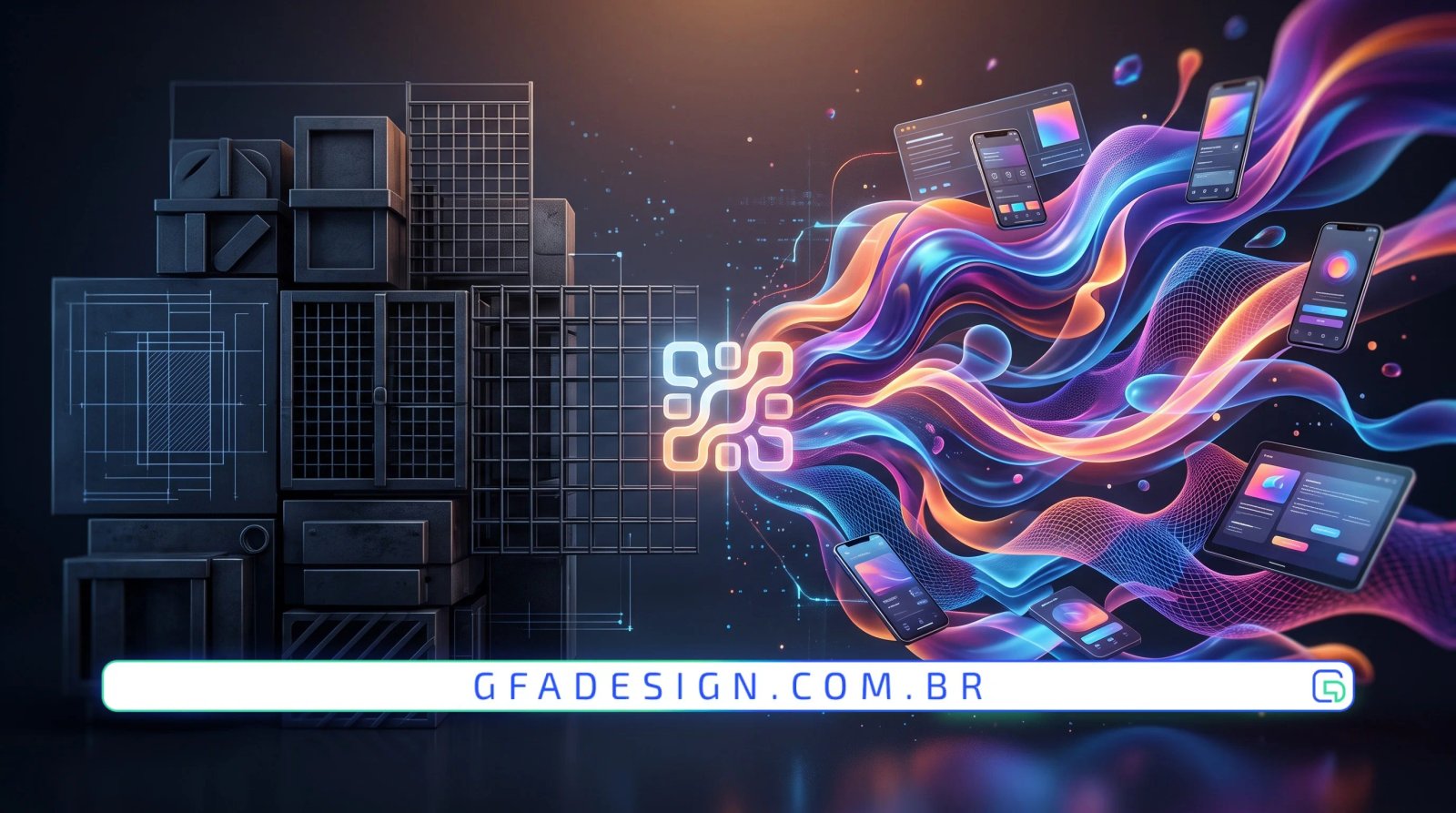
Discover how dynamic branding transforms corporate brands into adaptable visual ecosystems, driving higher retention and engagement.
The corporate market has changed drastically in recent years. In the past, a successful visual identity relied exclusively on repetition and technical rigidity. The logo needed to appear in the exact same way on business cards, billboards, and institutional print materials.
However, the explosion of digital channels, screens with diverse resolutions, interactive interfaces, and dynamic social media transformed this rule. Companies that insist on maintaining rigid brand manuals face severe difficulties connecting with modern and hyperconnected audiences.
Our experience building corporate solutions for clients shows that the rigidity of traditional brand manuals often limits innovation on social media, in applications, and across the digital ecosystem as a whole.
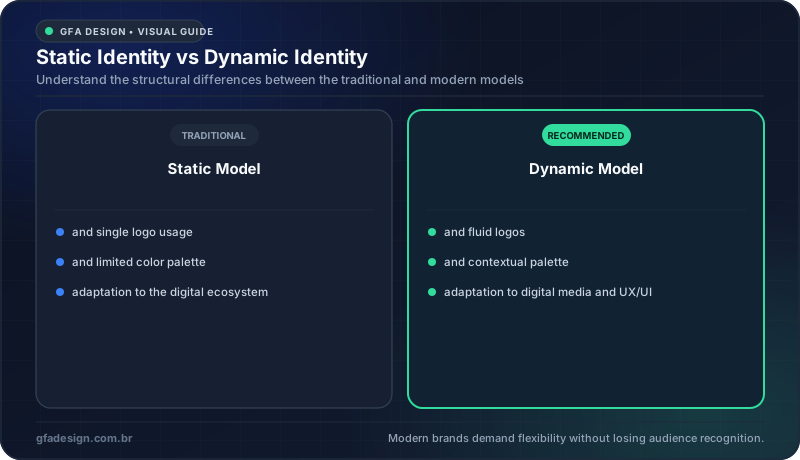
Technical comparison between rigid application and flexible brand approaches.
Dynamic branding, also known as flexible visual identity, is a strategic approach where the brand system is designed to adapt, shift, and evolve according to the context, platform, or user interaction. Instead of a static image, the brand functions as a living ecosystem.
This does not mean the brand loses its essence or becomes unrecognizable. On the contrary, the secret of dynamic branding lies in creating solid visual constants combined with flexible variables. The constants ensure the company is identified instantly, while the variables transmit energy, innovation, and real time responsiveness.
That is exactly why, here at GFA Design, we treat this detail as a top technical priority in our projects, building modular identities that maintain instant recognition while evolving across different digital and physical channels.
The adoption of this strategy generates direct benefits for audience retention, brand recall, and conversion rates on virtual platforms.
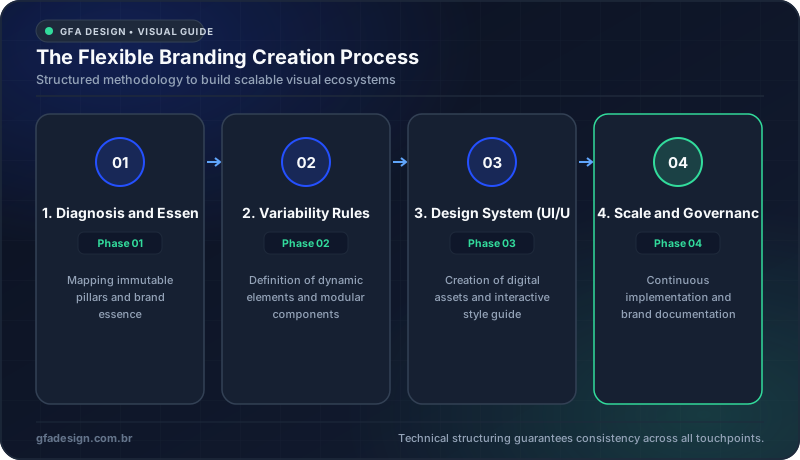
The four fundamental steps in building a living brand.
To implement a dynamically efficient identity without causing consumer confusion, the design architecture needs to follow clear and well documented guidelines. We highlight the main pillars:
As experts in digital conversion and corporate branding, we always recommend that flexibility be accompanied by clear rules of visual hierarchy, preventing aesthetic chaos and preserving company authority.
Investing in a dynamic visual ecosystem is not just an aesthetic choice, it is a strategic business decision. Brands that adapt quickly to market nuances communicate innovation, agility, and industry leadership.
Furthermore, by integrating branding with interface design and user experience, your company reduces usability friction on websites and applications. The result is a more engaged audience, longer page dwell time, and a significant increase in the perceived value of your products or services.
If your business needs a striking, contemporary digital presence prepared to scale, the rigid structures of the past no longer suffice. Success in today competitive environment requires a visual positioning that is dynamic, strategic, and focused on high performance.
At GFA Design, we unite corporate branding strategy, top tier graphic design, and advanced web development to create memorable visual ecosystems. Contact our specialists today and discover how we can transform the digital future of your company.
I work with strategic design to position your company and attract the right clients.
Explore branding & web design services