
November 2, 2026
AI-Generated Logos: The Illusion of Speed and Usability Risks
Discover why AI-generated logos suffer from severe technical usability flaws and how to protect your company's visual identity.
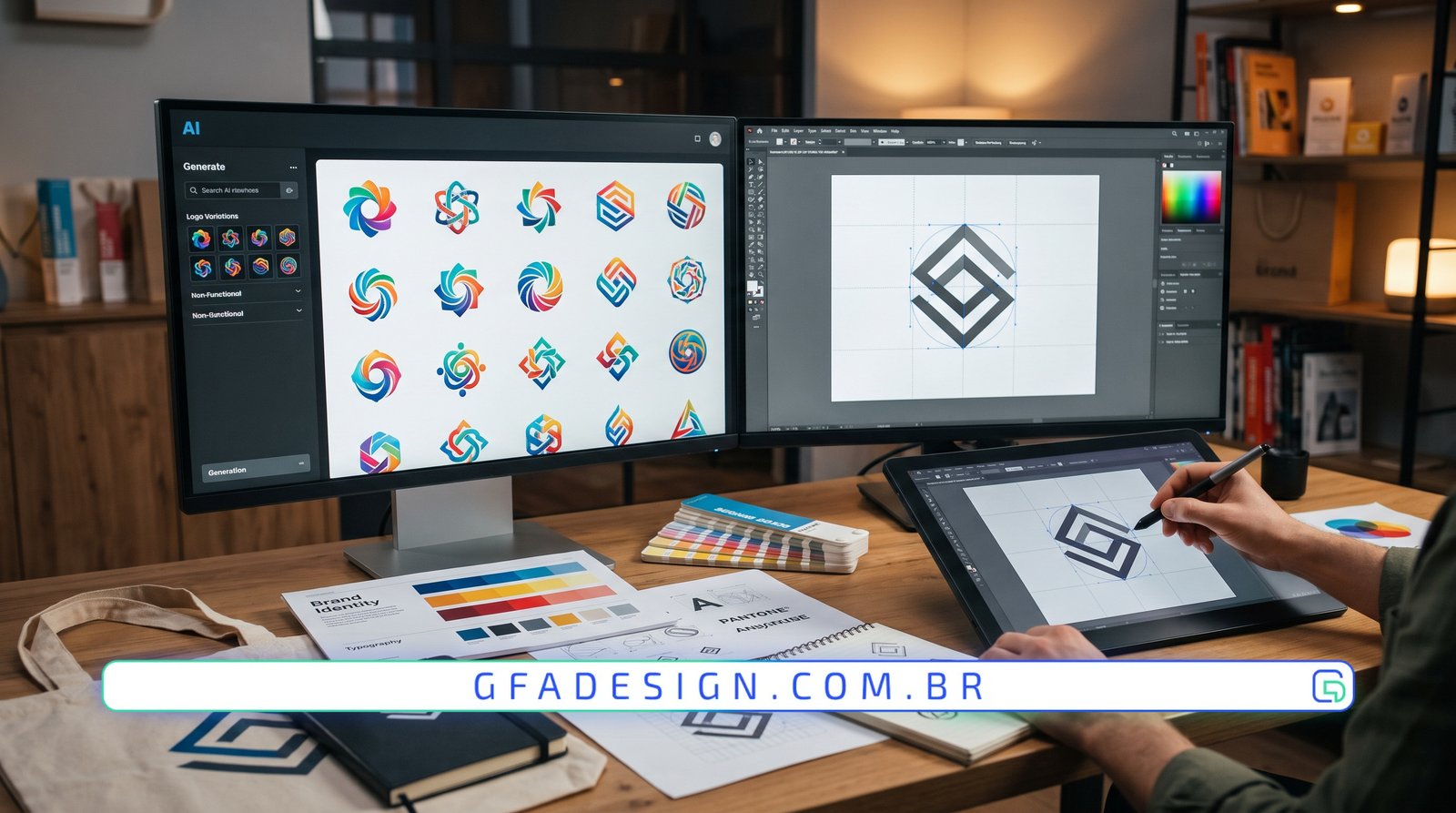
Discover why AI-generated logos suffer from severe technical usability flaws and how to protect your company's visual identity.
The promise is tempting. With just a few clicks and a brief text prompt, artificial intelligence tools generate dozens of logo options within seconds. This convenience has triggered a massive surge in algorithmically created visual identities across the global market.
However, technical realities set in as soon as companies attempt to deploy these logos in real world scenarios. What initially appeared to be a smart cost saving measure quickly turns into an operational and brand positioning obstacle.
Generative AI platforms impress with speed and instant visual attraction. They combine shapes, colors, and typography based on popular internet patterns, delivering visually pleasing results directly on screen.
Yet, true brand identity development involves factors that extend far beyond initial surface aesthetics. A corporate visual symbol must function as a flexible, adaptive system engineered for diverse print and digital formats.
Our experience building corporate solutions for clients shows that aesthetic design without technical foundations creates hidden costs. An attractive image generated by AI frequently fails to meet the practical, real world application demands of your business.
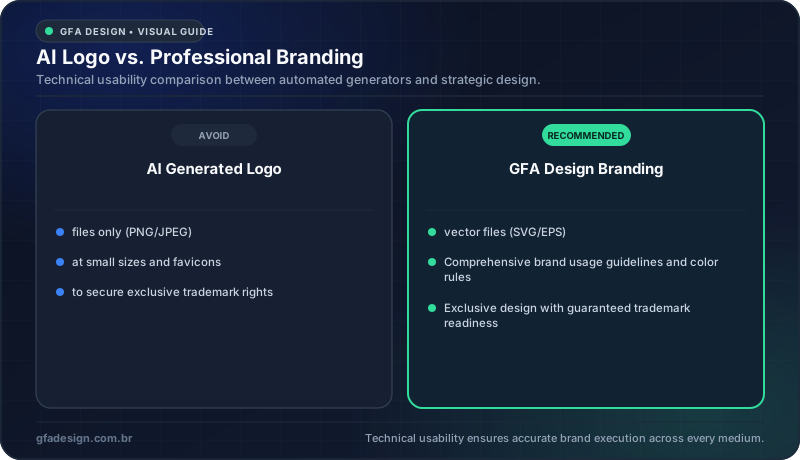
Comparison of technical deliverables and brand usability.
The primary bottleneck of algorithmically generated visual identities lies in technical usability. Most AI tools deliver static image files, such as PNG or JPEG, lacking proper vector structures.
This generates several practical limitations in daily business operations, including:
That is exactly why, here at GFA Design, we treat vector versatility and technical application guidelines as top technical priorities in our corporate projects.
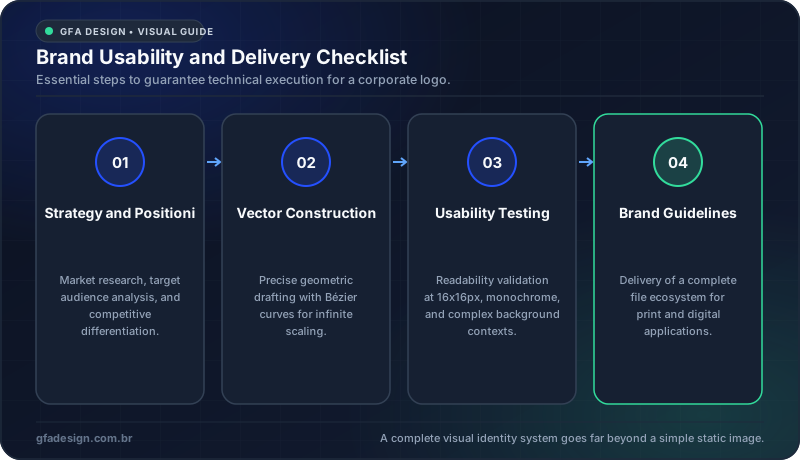
Technical brand usability validation process.
Beyond technical usability issues, a critical legal barrier exists. Artificial intelligence algorithms generate graphics by combining millions of existing online references. This means your logo may contain elements identical to existing companies worldwide.
Trademark registration requires genuine originality and distinctiveness. A generic concept produced by an algorithm rarely qualifies for exclusive legal trademark protection, leaving your business exposed to copyright disputes.
As experts in digital conversion and brand strategy, we always recommend that initial investments secure complete intellectual property ownership over your visual identity. Brand security remains the cornerstone of long term market authority.
Artificial intelligence serves as a helpful tool for research and preliminary insights, but it cannot replace the strategic perspective of a senior designer. Professional design analyzes target audiences, evaluates competitors, and engineers brand systems engineered for conversions and technical usability.
A functional logo is far more than a decorative symbol. It represents a vital business asset engineered on precision grids, featuring accessible color palettes and file systems prepared for any future deployment.
Do not allow the technical limitations of an AI generated logo to compromise your company's credibility. Investing in a professional, scalable visual identity is the primary step toward positioning your brand ahead of the competition.
Ready to elevate your digital presence and market authority? Connect with the team of experts at GFA Design today to discover how we can build an exclusive, high performance visual solution tailored specifically for your business.
I work with strategic design to position your company and attract the right clients.
Explore branding & web design services